You have the idea. We’ll help figure out the object.
Prototyping is for the uncertain middle: when you know the problem or opportunity, but the form, mechanism, material or build still needs to be worked out.
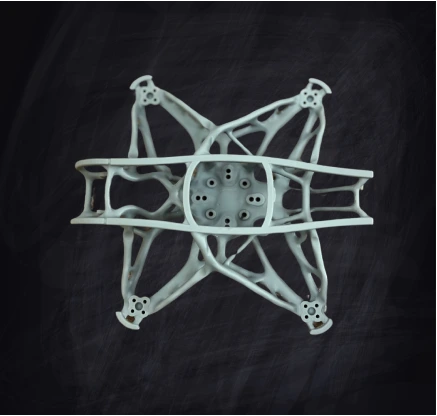 Thinking + iteration
Questions we help answer
Will it work?
Test mechanisms, assemblies and functional assumptions before committing further.
Will it fit?
Validate scale, ergonomics, clearances, interfaces and enclosure constraints.
Is it ready?
Refine the design through purposeful iterations toward a production decision.
Prototype is not just another word for print.
Here, you are paying for thinking and iteration—not only for the physical output. We help turn sketches, references, early CAD or a problem statement into something testable, then use what we learn to improve the next version.
- Concept development
- CAD creation and refinement
- Mechanism and design iteration
- Fit, form and function validation
Physical, mechanical and electronic parts can meet here.
When the concept needs more than a shell, we can help think through enclosures, interfaces, mechanisms and practical integration with electronics. The scope is shaped around the question the prototype needs to answer.
- Material and process selection
- Enclosures and component integration
- Assembly and interface checks
- Multiple test iterations
Learn something with every version.
Frame
Define the problem, constraints and the decisions this prototype must unlock.
Develop
Translate the idea into CAD, mechanisms and a focused test plan.
Build
Make the prototype with the process and material best suited to the question.
Learn
Review what worked, adjust the design and decide the next iteration.
Frequently asked questions.
What can I bring to start a prototype?
A problem statement, sketch, photograph, reference object, rough CAD file or early concept is enough to begin. We first clarify what the prototype needs to prove.
What is the difference between prototyping and 3D printing?
Prototyping includes design thinking, CAD refinement, material decisions, testing and iteration. 3D printing is a production process used when the object is already sufficiently defined.
Can a prototype include electronics or mechanisms?
Yes, when relevant to the brief. We can plan housings, interfaces, moving parts and practical integration around the questions the prototype must answer.
How many iterations will a project need?
That depends on the uncertainty and the decisions being tested. We define a focused purpose for each version so every iteration produces useful information.
That’s exactly where prototyping starts.
Bring a sketch, reference, rough CAD file or simply the problem you are trying to solve.